
Marsh zonation
Shorelines are made up of different marsh zones that are characterized by how often and how long the area is wet during high and low tide. These zones—typically categorized as low marsh, mid marsh, and high marsh—each have different environmental conditions like salinity, water depth, and soil saturation, which in turn influence which plant species can thrive there.
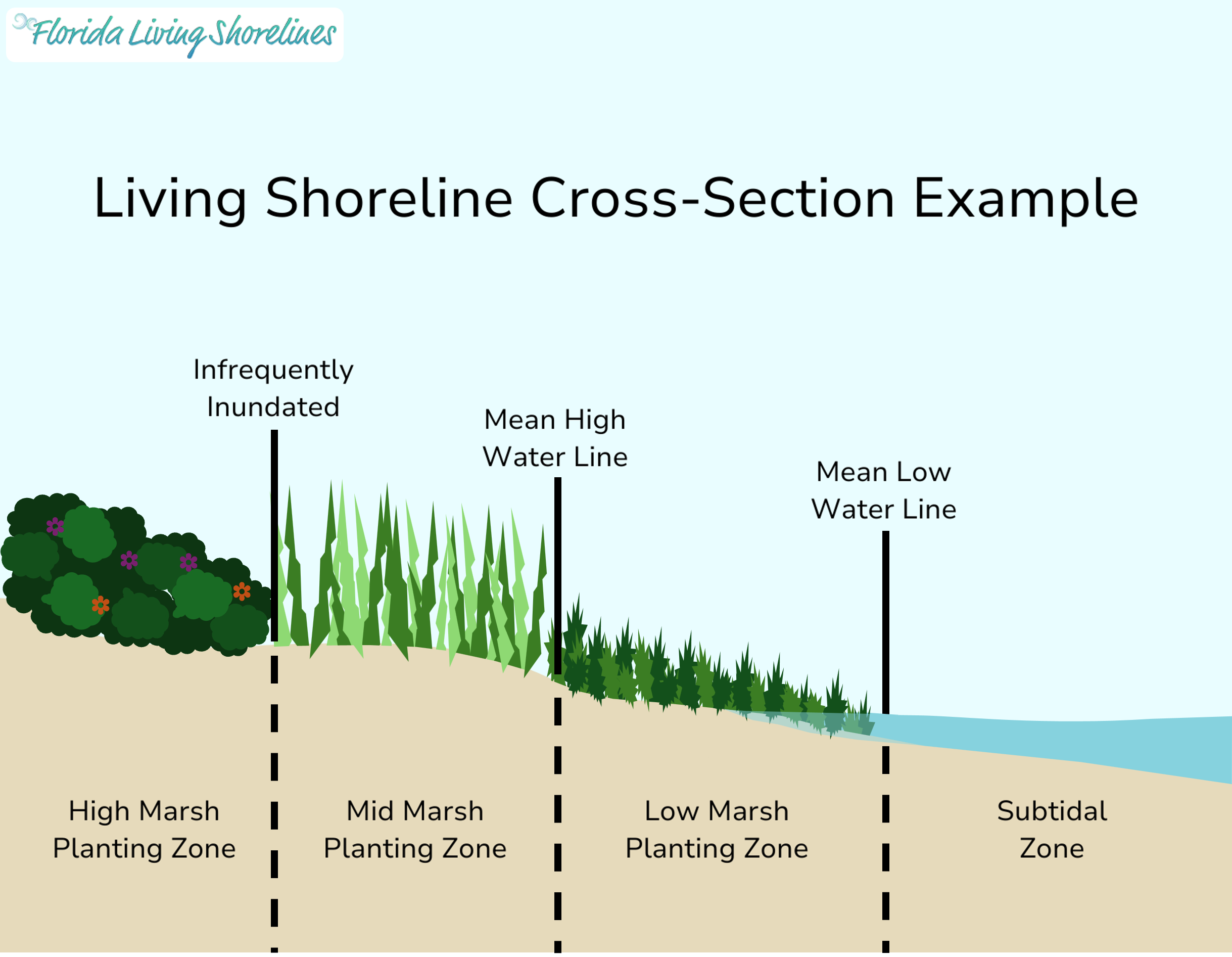
The low marsh planting zone is located along the waterward edge of the marsh. It is flooded daily and typically exposed during low tide.
The mid marsh planting zone lies above the Mean High Water Line (MHWL), between the low marsh and high marsh zones. It experiences occasional flooding, but conditions are generally drier. Vegetation in this zone consists of plants that are both salt-tolerant and flood-tolerant.
The high marsh planting zone is generally only flooded during exceptionally high tides. It remains mostly dry and plants here are adapted to minimal water exposure and low salt stress.
Explore plants
Click the buttons below to view native plants recommended for each marsh zone organized by region around the state!
Planting plans
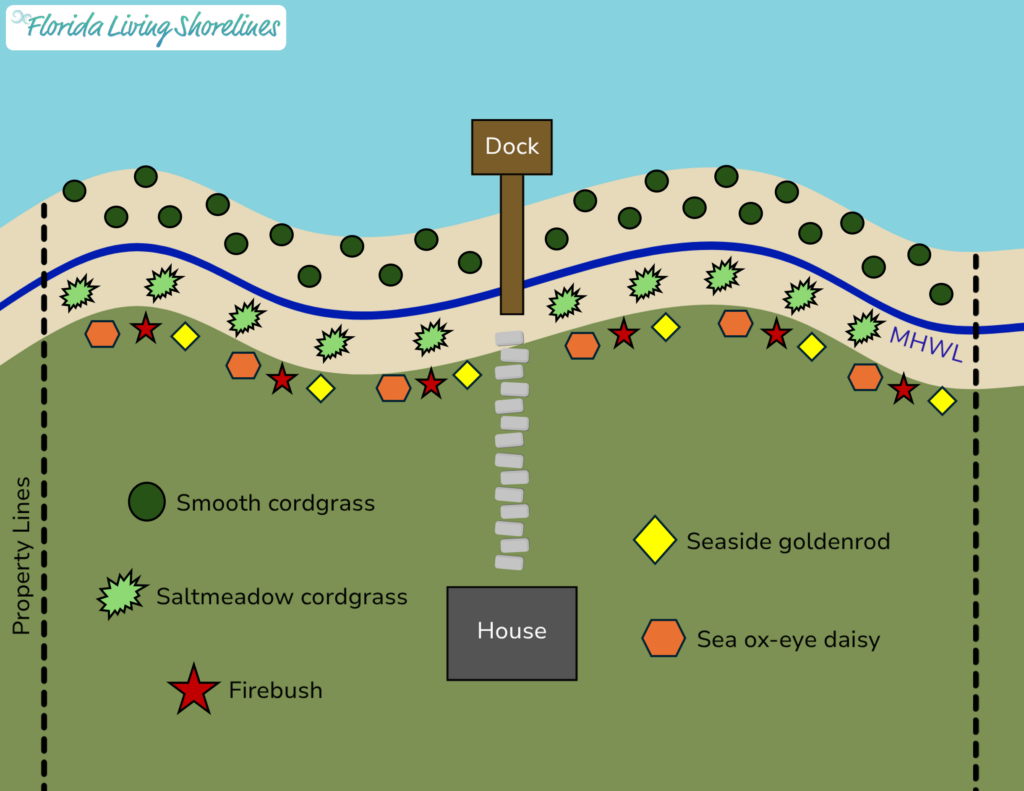
Your contractor may create a planting plan like the one shown to the left. It is an aerial view of your property and existing resources (e.g., house, dock) that outlines the intended planting location of each plant species based on the conditions of your site and the location of the Mean High Water Line (MHWL).
Example projects
Below are three examples of living shoreline projects around the state that highlight what can be achieved with plants! Hover over the photographs below to learn more about each project or click its name to find out where you can go see it in person.
This project in south Florida used only native plants to stabilize the shoreline.
This project in southeast Florida used all three species of mangroves and other native plants.
This project in northwest Florida used more than 10 different species of native plants.